Rereading feels like learning. Recalling is learning.
You read the chapter, then read it again. The second time everything looks familiar, and familiar feels like known. Then the exam asks you to explain it with nothing in front of you, and the page that looked so clear is gone.
Psychologists have studied this for more than a century, and the picture is consistent: pulling information out of your own head strengthens memory more than putting it in front of your eyes again. It is usually called retrieval practice, or the testing effect.
One well-known experiment had students either reread short texts or take a recall test on them. Five minutes later the rereaders did better. Two days and a week later it was the other way round: the students who had tested themselves remembered more. That is the trap in one result. Rereading wins in the moment you are doing it, which is exactly when you judge how well it works.
So the effort of not quite remembering is not a sign that the method is failing. It is the method, often called active recall. A mind map is a handy place to practise it: its titles can act as prompts, its branches show how ideas belong together, and the answers can stay hidden until you have tried. Here is how to use one to memorize, step by step. The screenshots use a short text about Einstein's theory of relativity.
1. Active recall: close the book and write what you remember
Take a blank page. Set a timer for three minutes. Write everything you can recall from what you just read: claims, names, steps, the example the author used. Do not tidy it up and do not peek.
It will be patchy, and that is useful. You now know something that rereading would have hidden: which parts you can actually produce, and which only felt solid while the page was open.
In Nodebook: if your notes are on a map, hide their content with the eye button. Nodes that have a title keep only the title, so you can look at each heading, say the rest out loud, and then show the content again to compare.
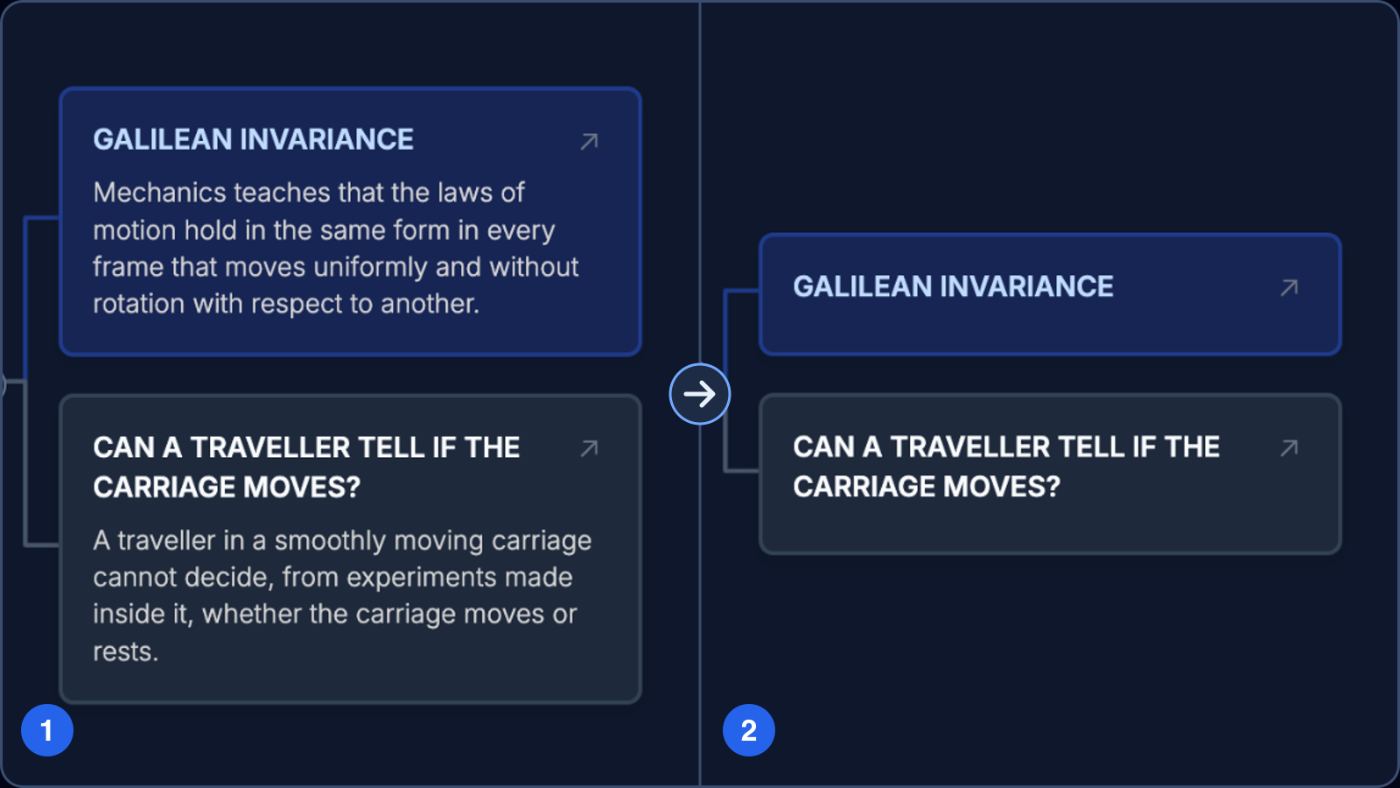
Try it: do one three-minute recall after every chapter.
2. Turn your mind map headings into questions
A heading such as "Mitosis" only invites a nod. "What happens in each phase of mitosis, and why in that order?" demands an answer.
Good questions ask for a reason, a comparison or a consequence, not only a name. "Who described this?" can be answered with one word. "Why can't a traveller tell whether a smoothly moving carriage is moving?" forces you to rebuild the argument. Write the question while the material is fresh, and keep the answer short enough that you can tell whether you got it.
In Nodebook: open a node, add a title with the T button and write your question there, with the answer in the text below. A node with a title and text works as a flashcard.
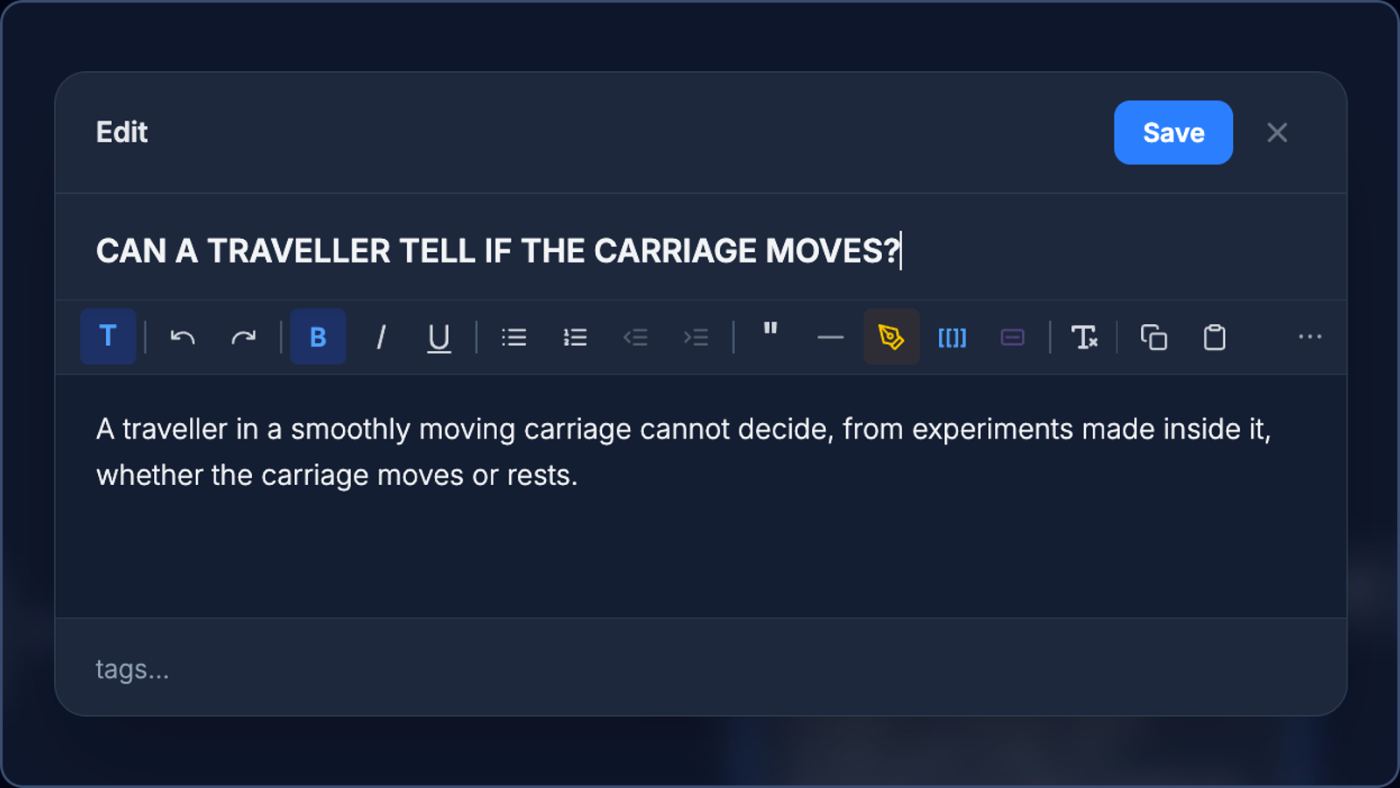
Try it: rewrite five headings from today's reading as questions.
3. Use flashcards: answer first, then check
The order matters. Commit to an answer before you look: say it aloud or write it down. A vague "yes, I know that one" is not an answer, and it is very easy to believe once the solution is on screen.
Then check against the source and be specific about what was wrong. A missing step is different from a mixed-up one. Research on retrieval practice generally finds that checking your answer afterwards adds to the benefit, and it stops a confident mistake from becoming the thing you remember.
In Nodebook: press Study in the flashcards panel. You see the title first. Answer it, press Show answer, then grade yourself honestly: Again, Hard, Good or Easy.
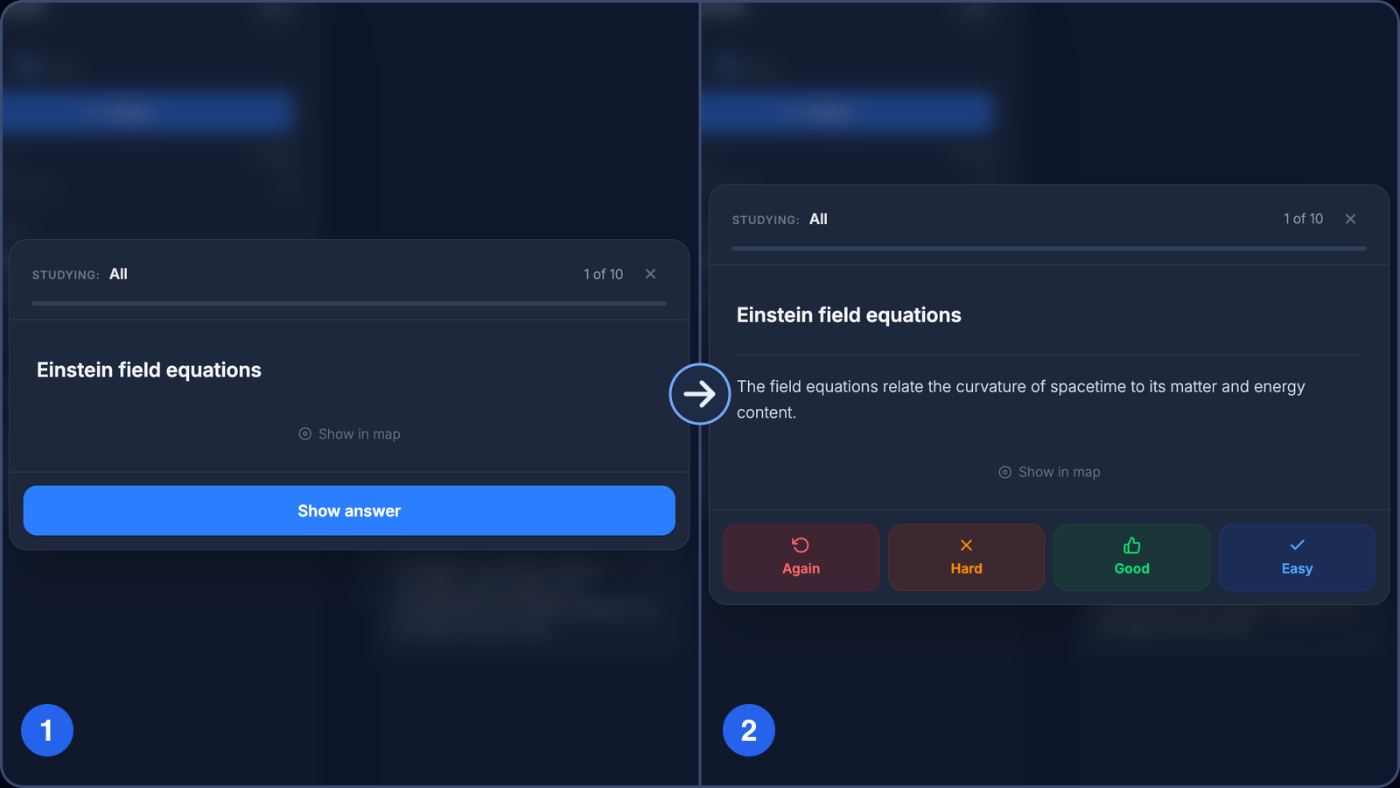
Try it: mark what you missed and study only that part.
4. Spaced repetition: come back after a gap
One test on the day you read something is a start. The larger gain comes from trying again after you have had time to forget a little. Spreading practice out is one of the most reliable findings in learning research.
You do not need a perfect schedule. Try the same questions the next day, then a few days later, then after a week or two. Questions you answer easily can wait longer. The ones you miss should return soon.
In Nodebook: your grades decide when each card comes back. Easy cards return further apart and the ones you fail return sooner. The panel shows how many are due and how many are new.
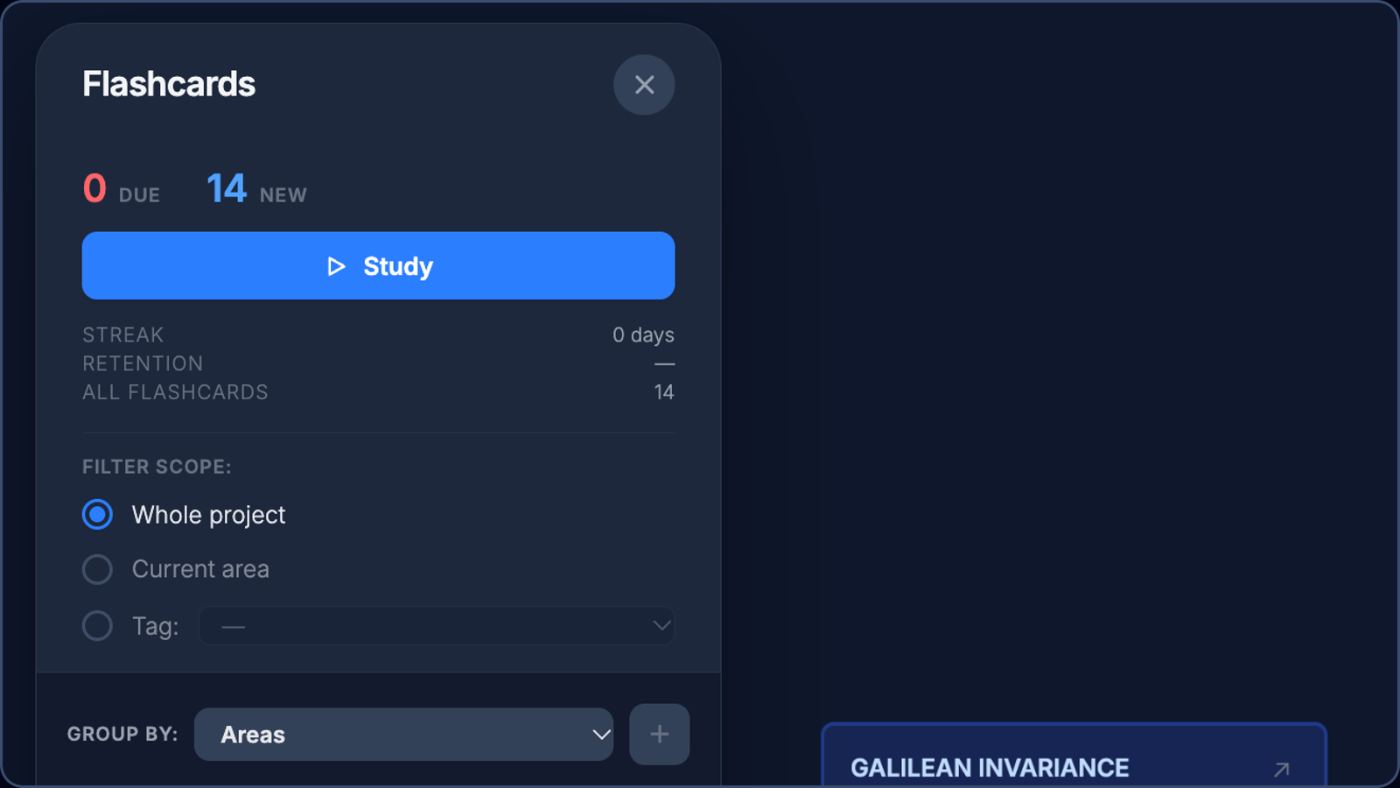
Try it: start your next study session with yesterday's questions, before reading anything new.
When it feels like it isn't working
Testing yourself feels worse than rereading. You stall, you guess, you notice gaps. That discomfort is easy to read as "I haven't studied enough to test myself yet", and the usual response is another round of reading.
Resist it for one round. If you can recall almost nothing, shorten the gap: read one section, close the book, recall, check, move on. Success does matter, because you need something to retrieve. But you need far less preparation than it feels like.
A good session ends with a short list of things you could not explain. That list is your plan for tomorrow, and it is far more useful than a chapter you have now seen three times.