

Cramming works. Until next week.
A long session the night before can get you through a test the next morning. Ask again a month later and much of it is gone. Forgetting is fast at first and slows down over time, a pattern researchers have been drawing as the "forgetting curve" since the nineteenth century.
Spaced repetition works with that pattern instead of against it. You review the same material several times, with a gap between reviews, and let the gaps grow. The total time can be the same as in one long session. What changes is how long the memory lasts.
The effect of spacing is one of the best supported findings in learning research. A large study of review gaps with more than a thousand participants added a useful detail: there is no single perfect interval. The longer you want to remember something, the longer the gap between reviews should be. For a test about a week away, a gap of a couple of days did well. For something you want to keep for a year, gaps of several weeks made more sense.
A simple spaced repetition schedule
If you want something to start with today, use these review days: the day after you learn it, then about three days in, one week, two weeks and a month.
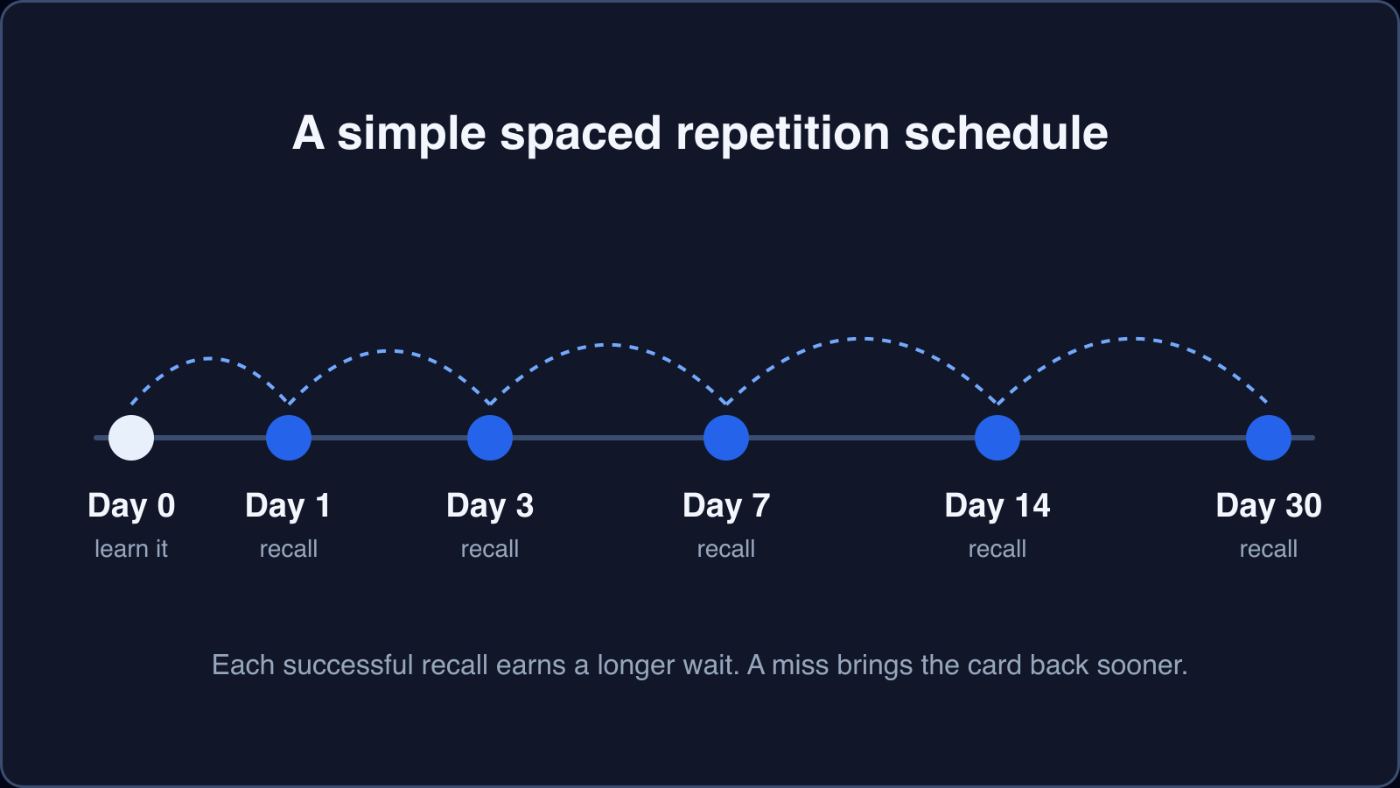
Treat it as a rule of thumb, not a law. These exact numbers are not magic. What matters is that you come back after you have started to forget, and that the next wait is longer when the last review went well. If your exam is in ten days, compress the whole plan. If you are learning a language or a profession, let it stretch over months.
1. Recall first, then look
A review is not rereading. Close the notes, answer from memory, and only then check. Rereading on a spaced schedule is still rereading. If you want the details of this step, see our guide on how to use a mind map to memorize.
Questions work better than headings. "Name the three postulates" or "Why does this happen?" gives you something you can get right or wrong.
2. Keep one place that tells you what is due
The weak point of every paper plan is remembering what to review today. A calendar with fifty topics soon becomes a list you avoid. A flashcard system solves this by keeping the date with the card.
In Nodebook: the flashcards panel shows how many cards are due and how many are new. Open a group to see the cards in it, and press Study to start.
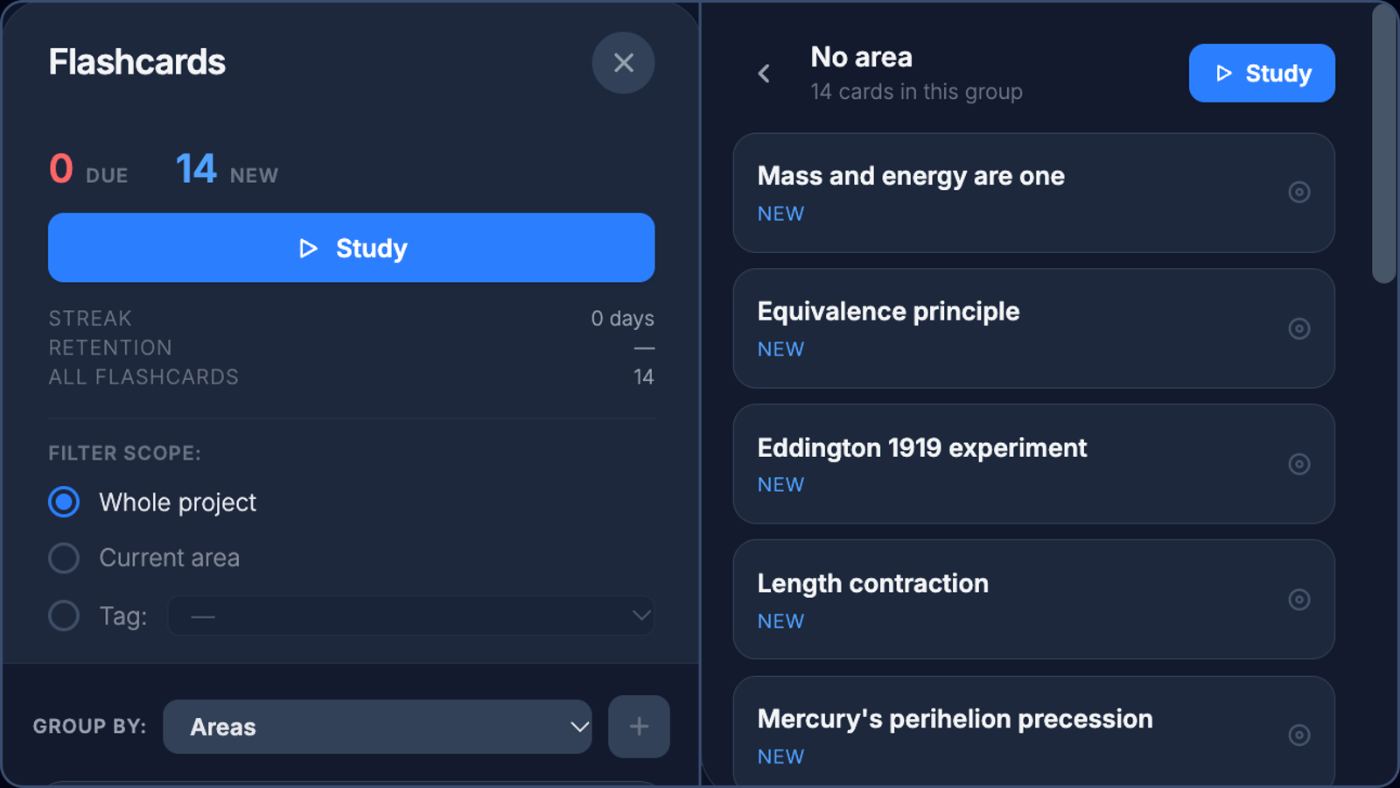
Try it: start each study session with what is due, before adding anything new.
3. Let difficulty set the gap
Not every idea deserves the same attention. The ones you answer instantly can wait. The ones you almost missed need to return soon. Being honest here matters more than any schedule: if you had to peek, it was not "easy".
In Nodebook: after you reveal an answer, grade yourself with Again, Hard, Good or Easy. The grade decides when the card comes back, using the SM-2 spaced repetition algorithm.
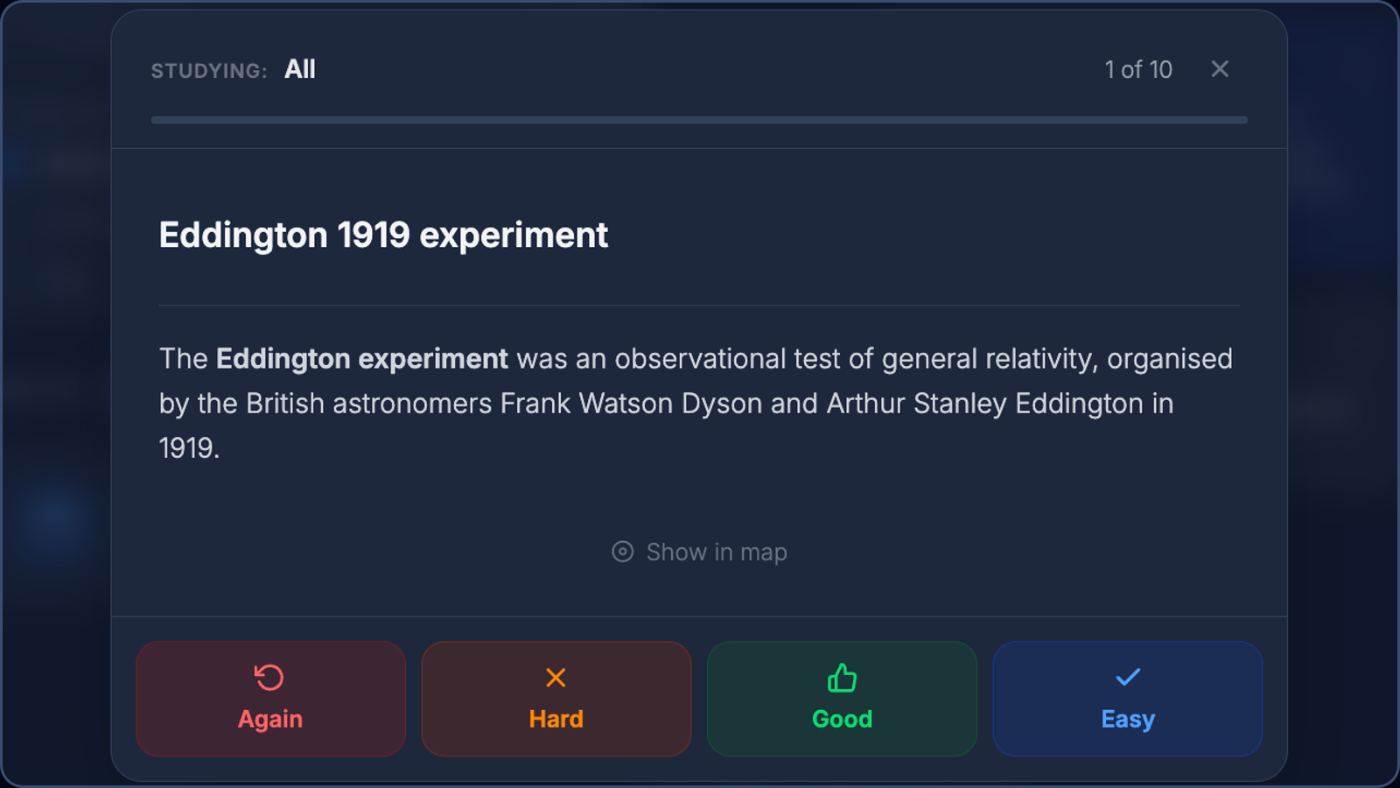
Try it: when you hesitate between two grades, choose the lower one.
4. Add new cards slowly
The most common way to give up on spaced repetition is enthusiasm. Two hundred new cards on Sunday become a wall of reviews on Wednesday. Every new card is a promise to see it again several times, so add them at a pace you can keep on a tired day.
In Nodebook: set the number of new cards per day in Settings. Ten is the default, and you can choose 5, 15, 20, 30 or no limit.

Try it: begin with five or ten a day for two weeks, then raise the number only if the reviews feel light.
When you miss a few days
You will. The pile grows and it is tempting to start over. Don't. Do a short session with what is due, even if it is only ten cards, and carry on tomorrow. Pause new cards until the backlog is gone.
A card you failed after a long break is not wasted work. You are relearning it, usually faster than the first time.
Where to start today
Pick one subject. Write ten questions about the last thing you studied. Answer them tomorrow without looking, mark the ones you missed, and set the next review for the end of the week. That is already spaced repetition. The tools only make it easier to keep going.